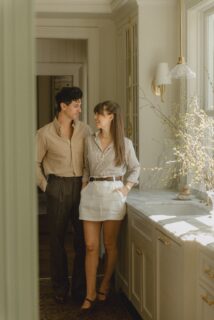

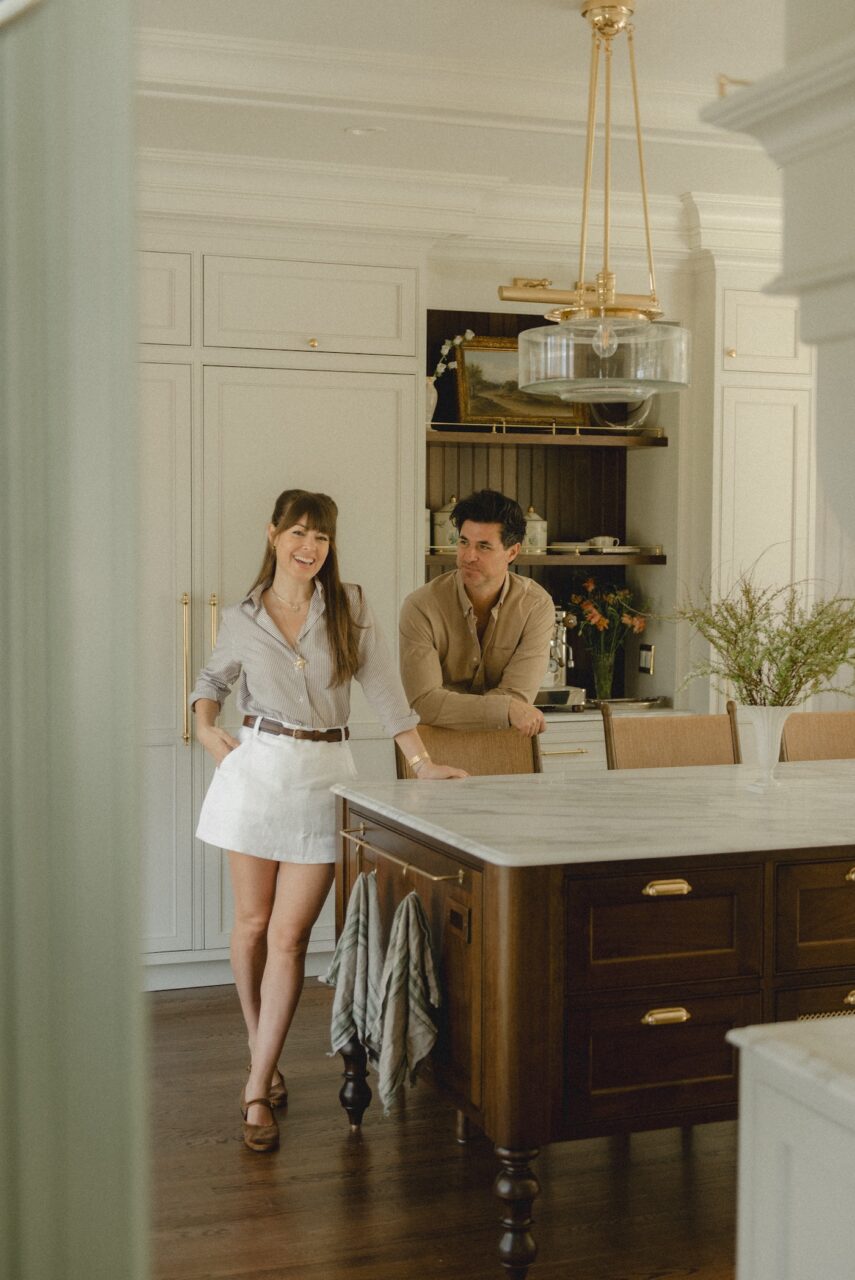
We’ve officially been living in our finished kitchen and mudroom for three months now and let me tell you, nothing, absolutely nothing feels better.
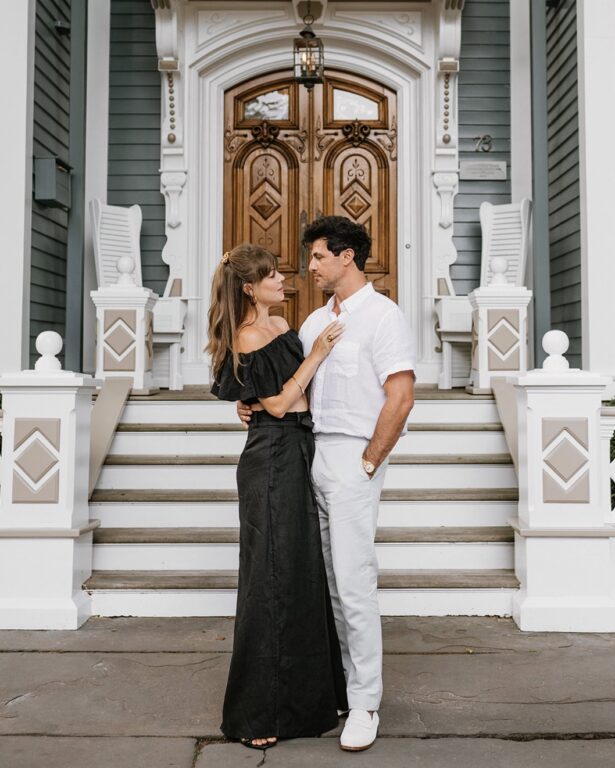
We are approaching our two year move in date at Sunnymead, our 1840 Colonial Revival home in Litchfield, Connecticut. We closed on the house on July 24th, 2024, but the vision for this space actually began months earlier, the very first time we toured the home in April.
BEFORE // AFTER


I still remember standing in what was then a dark, disconnected kitchen, trying to imagine what it could become. Not just aesthetically, but emotionally. How it would feel to cook here, gather here, host here, raise our girls here. To now stand in this exact space with all of that time behind us and the renovation finally complete feels like the biggest exhale.


Feeling settled as a family is one of the most important feelings in the world. Safe, grounded, comfortable, connected. And while there were beautiful moments throughout the renovation process, truthfully, living through a full scale historic renovation while essentially acting as the GC on much of the project was one of the hardest things I’ve ever done. It stretched me creatively, emotionally, and mentally in ways I did not fully anticipate.
There are still corners of Sunnymead slowly coming together, historic homes are never truly finished, but having this kitchen and mudroom completed in time for the spring and summer months ahead feels incredibly meaningful to me. This space has already become the heartbeat of our home. The place where muddy rain boots pile up after mornings outside, where olive oil splatters onto the stovetop during late night pasta dinners, where the girls sit at the island while I cook, and where friends linger far longer than planned around candlelit dinners.
I’ve shared so many details little by little over the past year, but so much more went into this project than what meets the eye. So I wanted this post to become a place that fully honors the process, every design decision, every material selection, every person who helped bring this vision to life, and all of the thoughtful finishing layers that made Sunnymead become what it is today.
Because when you live through a renovation like this, you realize the smallest details are often the ones that shape how a home feels most.
The Vision for the Kitchen
From the very beginning, the goal was never to create a “new” kitchen.
It was to create a kitchen that felt as though it had always belonged here. Quietly timeless, deeply functional, and fully connected to the architecture and spirit of Sunnymead itself.
When we first began conceptualizing the renovation, one of the most important decisions we made was partnering with Julia Metcalf, whose approach to architecture and interiors immediately aligned with the emotional direction we envisioned for the home. Our partnership was never about chasing trends or creating a showpiece kitchen detached from the rest of the house. Every conversation centered around preservation, proportion, permanence, and creating spaces that would feel just as beautiful and relevant decades from now as they do today.
Because our home sits within Litchfield’s Historic District, every meaningful architectural change also had to move through approval with the Historic District Commission during bi-monthly meetings throughout the renovation process. That added an entirely different layer of intentionality to the project. Nothing could feel abrupt, overly modern, or disconnected from the historical integrity of either the home itself or the surrounding neighborhood. In many ways, that process became creatively grounding. It forced every decision to slow down and be fully considered, from window placements and exterior sight lines to the architectural language carried throughout the kitchen and mudroom spaces.
One of the biggest transformations within the renovation was actually the layout itself. Originally, the kitchen was made up of multiple smaller disconnected spaces, the kitchen, mudroom, and a small closet area. In order to create a kitchen that felt functional for modern family life while still remaining architecturally appropriate, we had to structurally move one of the walls back into the mudroom to allow the kitchen to expand more naturally within the footprint of the home. That process also required removing the original chimney that once vented the previous oven.
At the same time, one of our biggest priorities became bringing natural light into the space. Originally, the kitchen only had two windows total, which left the room feeling incredibly dark and compartmentalized. We ultimately added two French doors opening out to the new deck and garden, along with two large windows over the sink that became the focal point of the entire kitchen.
The transformation that natural light created within the home is almost impossible to fully explain. Going from two windows total to eight completely changed the feeling of the space. The kitchen suddenly felt open, airy, connected to the outdoors, and fully alive throughout the day.
Together, Julia and I spent months refining layouts, studying symmetry, evaluating sight lines, and making sure every detail felt cohesive with the original architecture of the home. One of the things I appreciated most throughout the process was her restraint. Historic homes require an incredibly delicate hand, and she consistently approached every decision through the lens of honoring the integrity of the house rather than overpowering it.
Because the challenge with older homes is that modern kitchens can very quickly begin to feel disconnected from the architecture surrounding them. Appliances become oversized, layouts feel too open, finishes become too sharp, and suddenly the soul of the home quietly disappears.
So every decision became an exercise in thoughtful editing;
Could this detail have existed here decades ago? Would this finish age beautifully? Does this feel collected or overly designed? Will this still feel right twenty years from now? Is it symmetrical?
These questions became our framework for everything.


The Sink Wall
Once the layout of the kitchen was finalized, the sink wall naturally became the focal point of the entire room. With the addition of the two large windows overlooking the garden, this side of the kitchen completely transformed the feeling of the space. What was once dark and compartmentalized suddenly became open, light filled, and deeply connected to the outdoors.
Because the windows became such a strong architectural feature, we knew the sink and plumbing fixtures needed to feel equally intentional. They could not simply function within the space, they needed to visually anchor it.
We wanted the entire sink wall to feel timeless and symmetrical, almost as though it had always existed exactly this way within the home. Every element needed to support that feeling, from the scale of the windows to the glass cabinetry, the sconces, the marble, and ultimately the sink itself.
The Sink
For the sink, we selected the Shaw Original Apron Front Fireclay Sink. Because the sink sits directly centered beneath the windows, it needed to feel substantial enough to hold presence within the room while still remaining understated and classic. The Shaw sink brought exactly that balance.
The Faucet + Fixtures
For the faucet, we selected the Perrin & Rowe Georgian Era Bridge Faucet with Sidespray in unlacquered brass.


This faucet immediately felt architecturally correct for the home. The bridge detailing carries such a beautiful old world quality without feeling overly formal, and the proportions felt incredibly balanced against the scale of the sink and surrounding cabinetry.
We intentionally selected unlacquered brass so the finish would naturally patina over time alongside the surrounding hardware and lighting throughout the kitchen. Against the Calacatta Borghini marble, the warmth of the brass adds just the right amount of contrast and depth without overwhelming the space.
Together, these pieces became one of the quietest yet most defining moments within the kitchen.
The Appliance Wall + Coffee & Wine Bar
Another major focal point within the kitchen became the appliance wall with also includes the coffee and wine bar area, which sits directly opposite the range wall.


From the beginning, we knew we wanted this section of the kitchen to feel less like a traditional appliance zone and more like an extension of the millwork itself. Because so much of the design centered around creating a collected and architectural feeling, it was incredibly important that nothing visually interrupted the cabinetry lines or distracted from the overall warmth and symmetry of the room.


To achieve that, we selected fully panel ready appliances throughout the coffee and wine bar so everything could disappear seamlessly behind the cabinetry. That decision made such a significant difference in the overall feeling of the kitchen. Rather than seeing large stainless appliances breaking up the millwork, the eye instead reads the entire wall as one cohesive architectural moment. It allows the cabinetry, hardware, marble, and lighting to remain the focus while still fully supporting how we actually live day to day.
Functionally, this area has become one of the hardest working spaces in the kitchen. Morning coffee routines, evening cocktails, entertaining, wine storage, glassware, it all quietly lives here while still maintaining the softness and intentionality of the overall design.


One of my favorite finishing details within this area is the unlacquered brass gallery rail, which added such an old world European feeling to the coffee bar. Paired with the panel ready appliances and surrounding millwork, the entire space feels layered, integrated, and deeply connected to the architecture of the home rather than feeling overtly utilitarian.


The Custom Island
If there is one piece that truly anchors the entire kitchen, it is this island.
From the very beginning, Freddie and I knew we did not want a traditional built-in island. We wanted it to feel more like a substantial antique furniture piece, something reminiscent of an old dairy table that may have evolved naturally with the home over generations. It is a design detail you see so often in European countryside homes, and one we have always been incredibly drawn to.


There is something about the openness beneath the table, the way the light reflects off the hardwood floors underneath it, that creates such warmth and softness within the room. Traditional built-in islands can sometimes feel visually heavy, especially in historic homes, and we wanted this piece to feel airy, collected, and inviting while still grounding the kitchen architecturally.
This is where the collaboration between Jessica Fabbri and Guy Levolsi became so instrumental to the project.
Jessica and Guy have worked together on countless projects over the years, and both being local to Litchfield brought such an invaluable understanding of the architectural language and craftsmanship that feels authentic to homes in this area. That sensitivity to proportion, materiality, and historical appropriateness shaped so many of the final decisions throughout the design process.
The island design actually began with the legs! Defining the shape and silhouette became the foundation for the entire piece. I pulled an enormous amount of reference imagery, primarily antique European dairy tables and old work tables, and Jessica went to work sourcing actual antique table legs to study and share with Guy as inspiration for the final millwork design.
From there, every detail was thoughtfully refined to ensure the island felt architectural yet softened, functional yet deeply collected. We spent an incredible amount of time studying scale, overhangs, panel detailing, storage integration, and how the island would visually interact with the surrounding cabinetry, natural light, and overall flow of the room.
What I appreciated most about Jessica’s approach was her understanding that millwork should quietly support the feeling of a home rather than compete for attention. Every line and proportion was considered through that lens.
And if you followed this process in real time, you may remember that we actually built full cardboard cutouts of the island directly in the kitchen to study the proportions before finalizing anything. That exercise alone led us to refine the sizing twice, which ultimately made such a difference in the final balance of the room.
Then, Guy brought the craftsmanship to life in the most extraordinary way.
There is an unmistakable warmth that comes from true custom millwork, and you can feel it immediately in this island. The detailing, construction, finish work, and overall execution carry a softness and authenticity that machine made cabinetry simply cannot replicate.
The stain itself was a completely custom shop color, what Jessica lovingly refers to as “Java,” and it brought exactly the depth and richness we were hoping for against the softer painted cabinetry surrounding it.


The final dimensions of the island are 46” x 86”, with a height of 36″ from the floor to the countertop surface. One of my favorite hidden details is that while the island appears to feature two rows of eight symmetrical drawers, the end panels are actually concealed cabinet doors that open to additional shelving storage while maintaining the visual rhythm and symmetry of the piece.
The island ultimately became this beautiful balance between utility and furniture. It grounds the kitchen architecturally while still feeling layered and collected over time.
This emotional quality mattered deeply to us.


The Paint Colors
One of the questions I receive most often is about paint colors. And truthfully, selecting paint for a historic home is far more nuanced than simply choosing a “pretty white.” We wanted tones that felt soft, atmospheric, and quietly historic without skewing too yellow, too gray, or too stark. Tones that also complemented the direction of the setting sun in the afternoon and the cool blue light early morning.
Cabinetry: Farrow & Ball Shadow White
The cabinetry was painted in Farrow & Ball Shadow White, a color that shifts beautifully throughout the day. It carries a softness that feels incredibly layered in natural light and allows the cabinetry to feel integrated into the architecture rather than sharply contrasted against it. What I love most about Shadow White is that it never feels flat. It changes constantly depending on weather, time of day, and season.


Walls + Ceiling: Farrow & Ball Slipper Satin
For the walls and ceiling, we selected Slipper Satin to create continuity and warmth throughout the room. Using tonal variation within the same family of shades allowed the space to feel cohesive while still carrying depth and dimension.


Interior Cabinetry Accent: Farrow & Ball Ball Green
Inside the glass cabinetry, we used Ball Green, which adds the most beautiful layer of depth and old world richness. It creates contrast without feeling loud.
These subtle tonal shifts throughout the kitchen are what give the space movement and atmosphere.


Why We Chose Hand Painted Cabinetry
One of the most important decisions we made throughout the kitchen was opting for hand painted cabinetry rather than a sprayed finish. It is one of those details that people may not consciously notice immediately, but emotionally, it changes everything about how a historic home feels.
Sprayed cabinetry can often feel too perfect in older homes. Too flat. Too uniform. Too manufactured. From the beginning, both Jessica Fabbri and Guy Levolsi understood that we wanted the kitchen to retain movement, depth, texture, and a sense of age appropriate softness.


The hand painted finish allows light to move differently throughout the space. It creates subtle variation, dimension, and an almost atmospheric quality that feels much more authentic to the architecture of Sunnymead.
Combined with Guy’s craftsmanship and Jessica’s thoughtful millwork detailing, the cabinetry feels integrated into the home itself rather than installed into it.
And for us, that distinction is everything.
The Hardware Sources
Hardware was never an afterthought in this project. In many ways, it became the jewelry of the kitchen. We partnered with Rejuvenation because their pieces felt rooted in craftsmanship rather than trend driven design.
Throughout the kitchen, we used exclusively unlacquered brass and that decision was incredibly intentional. I wanted finishes that would evolve alongside the home. Unlacquered brass develops a living patina over time, softening and deepening with age rather than remaining static. Paired against walnut wood finishes, the warmth becomes incredibly layered and dimensional.
Perimeter Drawer Pulls
Howell Drawer Pull, 4″, Unlacquered Brass
A classic silhouette that feels substantial without overpowering the cabinetry.


Appliance Pulls
Howell Appliance Pull, 18″, Unlacquered Brass
These helped bridge the scale between the cabinetry and larger appliances while still maintaining visual softness.


Island Hardware
Vernon Bin Pull, 4″, Unlacquered Brass
I loved introducing a slightly different profile on the island to subtly reinforce its furniture inspired feel.


Coffee Bar Gallery Rail
Unlacquered Brass Traditional Gallery Rail
One of my favorite finishing details in the kitchen. Functional, but also deeply decorative in an old world way.
The Franklin Cremone Bolt
The Franklin Cremone Bolt from Rejuvenation completely transformed the glass cabinetry flanking the sink wall. As I shared in my interview with Rejuvenation, it feels less like hardware and more like an architectural moment. Almost like jewelry for the cabinetry itself. There is a weight and craftsmanship to it that immediately elevates the entire kitchen. It became one of those subtle statement pieces that quietly makes everything around it feel more custom and considered.


The Lighting Sources
Lighting was one of the most technically important aspects of the renovation which Julia Metcalf was heavily involved with. Historic homes can feel visually heavy very quickly, especially once cabinetry, wood finishes, and hardware are layered in. So we focused heavily on maintaining sight lines.
We selected fixtures with clear glass whenever possible to allow the architecture to remain visible and uninterrupted. This helped the brass bring warmth and character while still keeping the kitchen feeling airy and open.


Island Pendants
Hood Classic Pendants, Unlacquered Polished Brass – Traditional in silhouette but restrained enough to disappear into the architecture rather than compete with it.


Sink Wall Sconces
Berkshire Single Sconces – These added symmetry and softness around the sink wall while reinforcing the layered lighting approach.


Ford’s Mill Swing Arm Sconces – One of my favorite functional details in the mudroom transition space.


Picture Lighting
Cabinet Maker’s Picture Lights – One of my favorite finishing details throughout the kitchen. Artwork in the kitchen is a non negotiable and these make it feel like a gallery.


Mudroom Bell Jar Pendants
Bell Jar Pendants – These brought such timeless character into the mudroom. I love the way you can see these from the dining room. The sightline to this pieces are chefs kiss!


The Range
The range was always going to be one of the defining elements of the kitchen, both visually and functionally. After months of research, Freddie and I ultimately selected the La Cornue CornuFé 110 Range in chrome and unlacquered brass, and truthfully, I cannot imagine this kitchen without it now.


From a design perspective, it brought exactly the old world European character we were hoping for without feeling overly formal or heavy. The polished chrome reflects light beautifully throughout the kitchen, balancing the warmth of the painted cabinetry and walnut wood tones, while the unlacquered brass details tie seamlessly into the hardware and lighting selections throughout the space.
Scale was incredibly important as well. The 110 felt substantial enough to anchor the room architecturally while still respecting the proportions and sight lines of the home. From a cooking perspective, this range completely transformed how we use the kitchen day to day. As you know, Freddie cooks constantly, and this space was designed to truly function for family life, entertaining, and recipe development, not simply look beautiful.


The double convection oven configuration has been one of the biggest luxuries, especially when hosting, and the responsiveness of the burners and overall craftsmanship is something you genuinely feel every time you cook and we’ve been cooking with it now solidly for three months with no complaints!
The Execution
Of course, none of these details come together without execution. Historic renovations require an enormous amount of precision, patience, and problem solving behind the scenes on a day to day basis, which is why working with Steve and the team at SCW Construction became such an essential part of this project.
Older homes are rarely straightforward. Every wall, floor line, ceiling transition, and structural discovery requires adaptability in real time. What made this process feel so collaborative was the shared understanding that shortcuts were never the priority. Every decision was approached through the lens of craftsmanship and longevity.

Whether it was preserving architectural integrity, refining transitions between old and new spaces, or executing highly custom details throughout the kitchen and mudroom, Steve and his team consistently approached the home with care and respect.


That level of execution is what ultimately allows a kitchen like this to feel seamless rather than overly renovated. The best historic restorations are the ones where you stop noticing what is new and simply feel the home as a whole and that was always the goal.